
Announcing the Estuary of Us: Valuing Birth Workers Requires More Than Praise
By Josselyn Taylor, Director of Queens Village
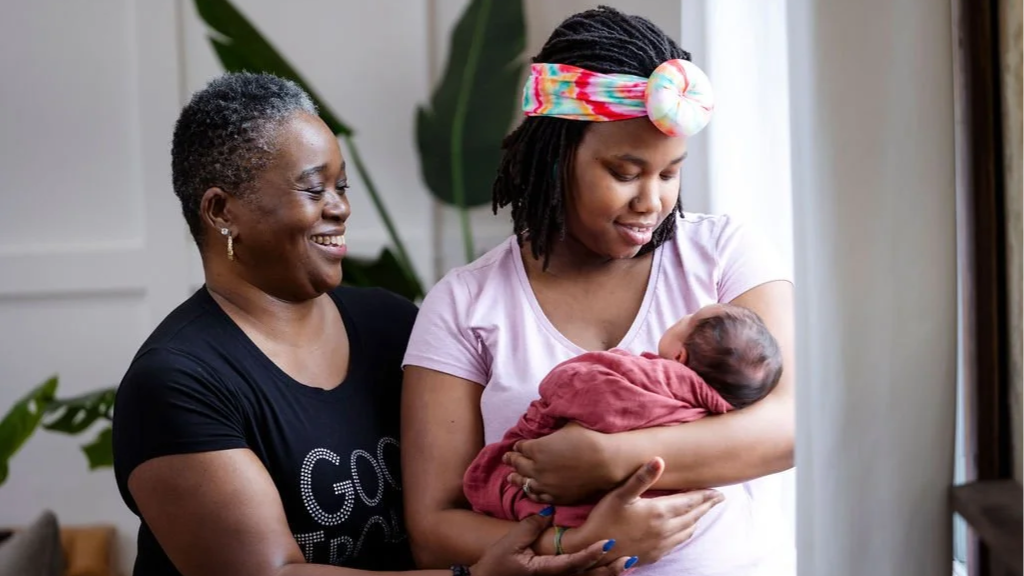
For as long as there have been babies, we have had birth workers helping to bring them into this world. Before hospitals, physicians, and nurses became the norm, the community counted on the skillset of wise women. With the widespread acceptance of modern medicine came a devaluation in practices that had kept us through the ages. Despite important advancements, we have not seen the level of improvement in infant and maternal health that was expected. And here in the United States, we continue to struggle to consistently provide safety to women and babies.
Alongside this recognition has come a renewed respect for birth workers, what they do and how they do it. The benefits of access to their care have been supported through data, anecdotal evidence from mothers and families, and even physicians have begun to affirm what communities already knew. Despite this, and as we increasingly look to them to bridge gaps in outcomes, our willingness to pay and support these women has not matched the value of their service. For many doulas, particularly those serving under-resourced communities, annual earnings can fall as low as $15,000 per year.¹ Additionally, many birth workers are unsalaried, working part time, and without benefits. This is not how you treat a workforce you need, value, and respect.
With this in mind, The Estuary of Us was born. In 2024, bi3, Community Health Acceleration Partnership (CHAP), and UnitedHealthcare joined together to provide $70,000 to Queens Village, with $20,000 designated to support the planning and administration of the fund and $50,000 to be put directly into the hands of birth workers. And because I am not a birth worker, a board of birth workers was put together. Community Health Workers, Lactation Consultants, Doulas, Midwives, and Birth Educators were called to inform every piece of how this fund would be formatted and delivered because we don’t make decisions about communities without their presence at the table.
We are deeply grateful to the birth workers who lent their expertise and leadership to this process:
Myla Perry
Jocquelene Pressley
Cheryl Smith
O’Landrea Joi Barnes
Danielle Gentry
Jamaica Gilliam
Fran Kazimierczuk
Special thanks to Ashley Felts, whose guidance and facilitation helped shepherd the advisory board through the design process and bring this vision to life.
When we began meeting in early 2025, we knew we did not want this to function like a traditional grant process, one where people already operating at the edge of their capacity are forced to give even more by writing paragraphs and essays to explain why they need and deserve support. We wanted the barrier to entry to be low and refused to create yet another process that asked birth workers to pour from already near-empty cups or to display their life traumas to prove worthy. We also chose not to dictate how funds could be used. As a group, we trusted that the women holding our community’s babies in their hands would know exactly what they needed to sustain themselves. Whether that meant supplies, childcare, rent, or even a vacation, we believed they were best suited to determine how those resources are spent.
We continued to lean on a trust-based philosophy to ensure the fund reached the community it was designed to serve, relying on trusted networks and relationship-based dissemination rather than broad public promotion. Even with this intentionally targeted approach, demand quickly demonstrated the depth of need. The Estuary of Us received 58 applications from birth workers across the region, including both current and aspiring birth workers. For us, the response confirmed what we already knew: the need is real, it is deep, and it is not being met. In total, we were able to award 37 current birth workers with $1,198 each and 7 aspiring birth workers with $500 each. It is not enough, and we know that. But we hope it signals to every birth worker who applied, awarded or not, that we see them and we care.
Efforts like The Estuary of Us are only the beginning. A one-time check may offer relief, but it is not a long-term solution to the structural challenges birth workers face. Mothers have been clear. Families have been clear. Even hospital systems have begun to affirm it: birth workers matter, and their care is essential to the health and survival of mothers and babies. Praises do not pay bills or keep food in the refrigerator, and if we truly believe in the value of birth workers, we must move toward sustainable systems that pay them what they are worth.
¹ The VBAC Link, "Doula Salary," thevbaclink.com, https://www.thevbaclink.com/doula-salary/About the Author Josselyn Taylor is a strategist, advocate and mother committed to advancing equity for Black families. She serves as Director of Community Strategies at Cradle Cincinnati, where she leads Queens Village, an initiative amplifying Black women’s voices to improve maternal and infant health outcomes. She is also the Founder of Our Tribe, a grassroots organization supporting the Black autism community. Her work is rooted in lived experience, community leadership, and a deep belief that those closest to the problem should shape the solutions.